

Exploring the Marrakech Medina: History, Souks & Hidden Gems
The Marrakech Medina is the historic heart of Morocco’s vibrant “Red City.” Encircled by centuries-old walls, this UNESCO World Heritage Site is a living labyrinth of winding streets, bustling souks, ornate riads, and hidden courtyards. Unlike modern cities, the medina thrives on tradition, culture, and sensory experiences, making it a must-visit destination for travelers eager to immerse themselves in Moroccan life.
In this guide, we’ll take you through the rich history, colorful markets, and secret corners of the medina. You’ll discover not only the major attractions but also hidden gems often overlooked by tourists, from tranquil gardens tucked behind walls to artisan workshops where centuries-old crafts are still alive.
Whether you’re a history enthusiast, a culture seeker, a foodie, or someone just looking to get lost in the maze-like streets, the Marrakech Medina offers something for everyone. By the end of your journey, you’ll understand why this medina is more than just a tourist spot—it’s the living soul of Marrakech, where the past and present coexist in a dazzling display of color, sound, and life.
A Historical Overview of Marrakech Medina
The Marrakech Medina is not just a collection of streets and buildings—it is a testament to over a thousand years of Moroccan history. Founded in 1070 by the Almoravid dynasty, Marrakech quickly became a political, cultural, and economic hub of the region. The city’s strategic location at the edge of the Atlas Mountains allowed it to flourish as a center of trade, linking sub-Saharan Africa with the Mediterranean.
Key Historical Highlights:
-
Almoravid Era (1070–1147): The founders established the medina’s first walls and built essential structures, setting the framework for the city’s labyrinthine streets that still exist today.
-
Almohad Dynasty (1147–1269): They expanded the city and constructed iconic monuments, including early mosques and palaces. Their influence on Marrakech’s architectural style is still visible in the medina’s intricate arches and minarets.
-
Saadian Dynasty (16th Century): Known for lavish palaces and ornate tombs, the Saadians left a lasting legacy, including the Saadian Tombs, which remain a major attraction.
-
Alaouite Dynasty (17th Century – Present): The current ruling dynasty contributed to the medina’s continued development, including fortifications, markets, and religious schools.
Architecture and Layout:
-
The medina is surrounded by red ochre walls, giving Marrakech its nickname, the “Red City.”
-
Historic Gates like Bab Agnaou and Bab Doukkala served both defensive and ceremonial purposes. Each gate tells a story of the city’s past, blending function with artistic detail.
-
The streets inside the medina are narrow and winding, designed for shade, privacy, and defense. Courtyards and riads (traditional houses with inner gardens) are hidden behind unassuming doorways, offering quiet retreats from the bustling streets.
Cultural Significance:
-
The medina has always been the social and commercial heart of Marrakech. It’s home to artisans, merchants, and families who have lived there for generations.
-
Today, it is a vibrant mix of old and new: locals go about daily life while tourists explore souks, palaces, and gardens. The medina remains a living, breathing center of Moroccan culture, reflecting centuries of history in every corner.
Navigating the Souks
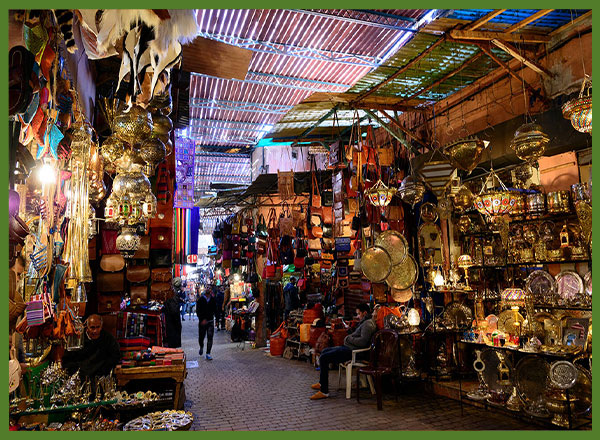
The souks of Marrakech Medina are the beating heart of the city—a labyrinth of narrow alleys filled with vibrant colors, intoxicating scents, and the constant hum of activity. Visiting the souks is not just shopping; it’s an immersive cultural experience that allows you to witness traditional Moroccan craftsmanship in action.
Introduction to the Souks:
-
“Souk” simply means market, but each souk in Marrakech has its own specialty, from textiles and spices to leather goods and jewelry.
-
Souks are organized by trade or craft, making it easier to explore depending on what you want to discover.
-
The atmosphere is lively and sometimes chaotic, with merchants calling out, the clatter of artisans at work, and the aroma of spices and fresh leather filling the air.
Plan Your Marrakech Medina Adventure!
Discover the magic of the Marrakech Medina by exploring both the famous sights and hidden gems. Start early to enjoy the peaceful streets, wander through the colorful souks, and take time to visit secret gardens and artisan workshops. Don’t forget to experience the vibrant energy of Jemaa el-Fnaa, especially in the evening when the square comes alive.
Popular Souks and What to Find:
Souk Semmarine – Known for textiles, clothing, and leather goods. A must-visit for Moroccan slippers (babouches) and traditional fabrics.
Souk Haddadine – Famous for metalwork and lanterns. Here, skilled artisans hammer intricate designs into brass, copper, and silver.
Souk Ableuh – The spice souk, where saffron, cinnamon, and cumin are sold in colorful pyramids. Don’t miss the dried fruits and nuts.
Souk Chouari – Dedicated to woodcraft, including carved furniture, traditional trays, and ornate frames.
Souk Smarine & Souk des Teinturiers – Focused on dyeing and wool products, where you can see artisans dyeing fabrics in vibrant natural colors.
Tips for Shopping in the Souks:
-
Bargaining is expected—start at about half the asking price and negotiate respectfully.
-
Keep an eye on your belongings; pickpocketing is rare but possible in crowded areas.
-
Look for authenticity—small workshops often sell higher-quality handmade goods than stalls targeting tourists.
-
Explore side alleys—hidden gems, quieter stalls, and traditional artisans often hide away from main thoroughfares.
Experiencing the Atmosphere:
-
The souks are a feast for the senses: the vivid colors of textiles, the smell of spices, the clink of lanterns, and the sounds of haggling create a unique, immersive experience.
-
Take your time wandering—every turn can reveal a hidden courtyard, a traditional fountain, or an artisan at work.
-
Capture photos respectfully and, if possible, ask artisans before photographing them at work.
Cultural Note:
-
Visiting the souks is more than shopping; it’s participating in a living tradition that has shaped Marrakech for centuries. Each alley, stall, and workshop tells a story of craftsmanship, trade, and cultural continuity.
Hidden Gems of the Medina
While the bustling souks and famous landmarks draw most visitors, the Marrakech Medina is full of secret treasures waiting to be discovered. These hidden gems offer a quieter, more intimate glimpse into the city’s culture, history, and artistry.
1. Secret Gardens:
-
Jardin Secret: Once the private gardens of Marrakech’s sultans, it has been restored to showcase traditional Islamic garden design, with fountains, orange trees, and intricate mosaics. A peaceful retreat from the busy streets.
-
Hidden Riad Gardens: Many riads have serene inner courtyards often overlooked by tourists. Some allow visitors to enjoy a tea or small tour, offering a private escape from the medina’s hustle.
2. Historical Sites Off the Beaten Path:
-
Ben Youssef Madrasa: A stunning example of Moroccan architecture, this historic Islamic school features carved cedar wood, colorful zellige tiles, and detailed plasterwork. Less crowded early in the morning.
-
Mouassine Fountain and Mosque: A beautifully restored 16th-century fountain tucked away in a quiet alley. The nearby Mouassine Mosque is an excellent example of Saadian-era design.
-
Dar Si Said Museum: Often overshadowed by more famous attractions, this museum focuses on Moroccan arts, crafts, and furniture, housed in a beautiful palace setting.
3. Local Artisan Workshops:
-
Venture beyond the main souks to discover artisans working behind closed doors—potters shaping clay, metalworkers hammering lanterns, or leather craftsmen dyeing and stitching products.
-
Visiting these workshops allows you to see traditional techniques in action and purchase authentic, handcrafted items directly from the maker.
4. Culinary Discoveries:
-
Small cafés tucked down alleys offer traditional Moroccan pastries like chebakia or msemen, often accompanied by mint tea.
-
Street food vendors outside the main square sell sfenj (Moroccan doughnuts), roasted nuts, and fresh juices, providing a taste of local life.
-
Some hidden corners feature rooftop cafés overlooking the medina—a perfect spot to enjoy a meal while watching the city’s labyrinthine streets below.
Why Explore the Hidden Gems:
-
These quiet spots provide a more authentic experience of Marrakech life.
-
They offer photographic opportunities free from crowds.
-
They allow visitors to connect with artisans and locals, gaining insights into Moroccan culture beyond the typical tourist route.
Pro Tip: Carry a small map or use a local guide to uncover these gems. Many are just around the corner from major attractions but easy to miss if you follow only the main streets.
Exploring Landmarks Around Jemaa el-Fnaa
At the heart of the Marrakech Medina lies Jemaa el-Fnaa, one of the world’s most famous public squares. This vibrant hub is not just a meeting point for locals and tourists—it is the living cultural center of Marrakech, where history, tradition, and entertainment converge.
1. The Famous Square:
-
Jemaa el-Fnaa is a sprawling open-air square surrounded by souks, restaurants, and historic buildings.
-
By day, it serves as a marketplace for fresh produce, spices, and traditional crafts.
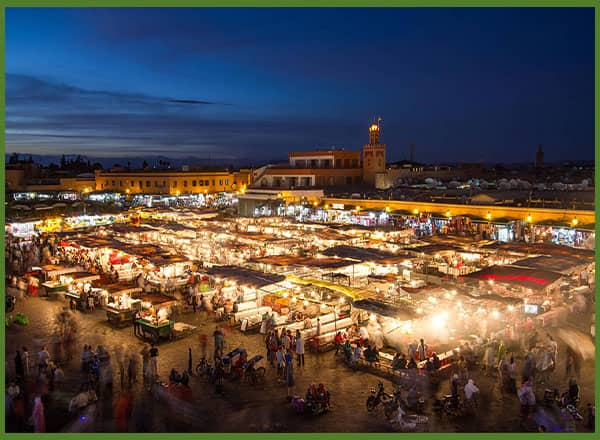
-
By night, it transforms into a theater of lights, sounds, and smells, with food stalls, storytellers, and performers creating an unforgettable sensory experience.
2. Cultural Performances:
-
Storytellers (Halqa): Traditional Moroccan storytellers gather to share folk tales, proverbs, and legends, keeping oral traditions alive.
-
Musicians and Dancers: Gnawa musicians, drummers, and local dancers perform daily, attracting crowds with rhythmic beats and captivating movement.
-
Snake Charmers and Animal Performers: While controversial today, these performances are part of the square’s historic identity. Visitors should observe respectfully and prioritize ethical interactions.
3. Food and Drink:
-
Jemaa el-Fnaa is a paradise for food lovers.
-
Street food stalls serve classics like grilled meats, merguez sausages, snails, and harira soup.
-
Freshly squeezed orange juice and Moroccan mint tea are available throughout the day, perfect for cooling off while exploring.
-
For a more relaxed experience, rooftop cafés overlooking the square provide a panoramic view of the bustling activity below.
4. Evening Transformation:
-
As the sun sets, the square comes alive with lights, smoke, and music.
-
The energy shifts from a busy market to a cultural spectacle, making the evening an ideal time to experience the medina’s vibrant spirit.
-
Photographers and travelers alike are drawn to the dynamic interplay of light, motion, and color, capturing the essence of Marrakech life.
5. Tips for Visiting Jemaa el-Fnaa:
-
Arrive early in the morning for a quieter, more leisurely stroll.
-
Avoid peak crowd hours if you prefer photography or a calm visit.
-
Be mindful of personal belongings in busy areas, especially around performers and food stalls.
-
Engage with local vendors and performers politely—haggling is part of the experience, but respect is essential.
Practical Tips for Exploring the Medina
Exploring the Marrakech Medina can be exhilarating but also overwhelming without some preparation. These practical tips will help you make the most of your visit while staying safe and comfortable.
1. Best Times to Visit:
-
Morning: Streets are quieter, shops are opening, and temperatures are cooler—ideal for photography and a peaceful stroll.
-
Afternoon: The medina becomes busier; a good time for shopping in the souks and enjoying lunch at local cafés.
-
Evening: Jemaa el-Fnaa transforms into a lively spectacle of performers and food stalls. A must-see for nightlife and cultural energy.
2. Navigating the Narrow Streets:
-
The medina is a labyrinth of alleys, so it’s easy to get lost.
-
Landmarks such as mosques, fountains, and gates are useful reference points.
-
Maps and GPS: Many mobile maps work offline—download before you go.
-
Guided tours can provide historical context and help navigate tricky areas, especially if time is limited.
3. Safety Tips:
-
Marrakech is generally safe, but pickpockets can target busy areas like Jemaa el-Fnaa and crowded souks.
-
Keep valuables secured and consider using a money belt or crossbody bag.
-
Dress respectfully: modest clothing shows cultural respect and can help avoid unwanted attention.
-
If approached persistently by vendors or performers, polite refusal works best. Firm but courteous is key.
4. Guided Tours vs. Independent Exploration:
-
Guided Tours: Offer insight into history, culture, and architecture. Ideal for first-time visitors.
-
Independent Exploration: Gives freedom to wander and discover hidden gems at your own pace.
-
Combining both approaches can give a balanced experience: start with a guided tour, then explore independently.
5. Essentials to Carry:
-
Water bottle (it gets hot in summer).
-
Comfortable walking shoes for cobblestones and uneven streets.
-
Sunscreen and a hat for protection during daytime strolls.
-
Small cash in local currency for purchases, tips, and street food.
6. Respect Local Customs:
-
Always ask before photographing people.
-
Be mindful of prayer times—some mosques are off-limits to non-Muslims.
-
Learning a few Arabic or French phrases (like “Salam” for hello or “Shukran” for thank you) can go a long way in showing respect.
Why These Tips Matter:
-
Following these practical guidelines ensures a safer, smoother, and more enjoyable experience.
-
Being prepared allows you to focus on the rich sensory and cultural experiences that make the Marrakech Medina so unforgettable.
Conclusion :
The Marrakech Medina is more than just a historic city center—it is a living tapestry of Morocco’s culture, history, and daily life. From the bustling souks to the serene hidden gardens, from iconic landmarks to secret artisan workshops, every corner of the medina tells a story of centuries-old traditions and vibrant modern life.
Visiting the medina allows you to step back in time, exploring streets that have witnessed centuries of Moroccan history. You can immerse yourself in local culture, whether bargaining for spices in a souk, watching craftsmen at work, or enjoying mint tea in a quiet riad courtyard. Along the way, you can discover hidden gems often overlooked by the average tourist, providing a more authentic and intimate experience of Marrakech. And no visit is complete without experiencing the heartbeat of the city at Jemaa el-Fnaa, where the energy, sounds, and sights of Moroccan life converge in a dynamic spectacle.
Plan your journey through the medina with curiosity and patience. Take your time to wander, explore, and get lost, because the true magic of Marrakech lies in the unexpected corners and quiet moments between the famous sights. Whether it’s the aroma of spices, the chatter of the souks, or the peaceful shade of a hidden garden, every step in the medina brings a new discovery.