

Inside a Traditional Moroccan Riad: History, Architecture, and Hidden Beauty
Hidden behind modest walls and unassuming doors, traditional Moroccan riads reveal a completely different world once you step inside. Far from the noise and movement of the streets, these homes open into peaceful interior spaces filled with light, intricate details, and a sense of calm that immediately sets them apart. For many visitors, discovering a riad is not just about architecture—it is about experiencing a unique way of living that reflects Morocco’s cultural depth.
In historic cities like Marrakech and Fes, riads are an essential part of the urban landscape. While their exteriors may appear simple, their interiors are carefully designed to combine beauty, privacy, and comfort. From central courtyards to handcrafted decorative elements, every aspect of a riad tells a story shaped by centuries of tradition and influence.
Understanding what makes these spaces so distinctive requires looking beyond their visual appeal. It involves exploring their origins, their architectural philosophy, and the cultural values they were built to support.
What Is a Riad?
A riad is a traditional Moroccan home built around a central, open-air courtyard or garden—an architectural concept designed to create a private, peaceful world within the heart of the city. The word “riad” comes from the Arabic term for garden, and this idea is essential to understanding its purpose: a space where nature, light, and daily life come together in harmony. Unlike many modern buildings that face outward, a riad turns inward, offering a calm retreat away from the energy of the surrounding streets.
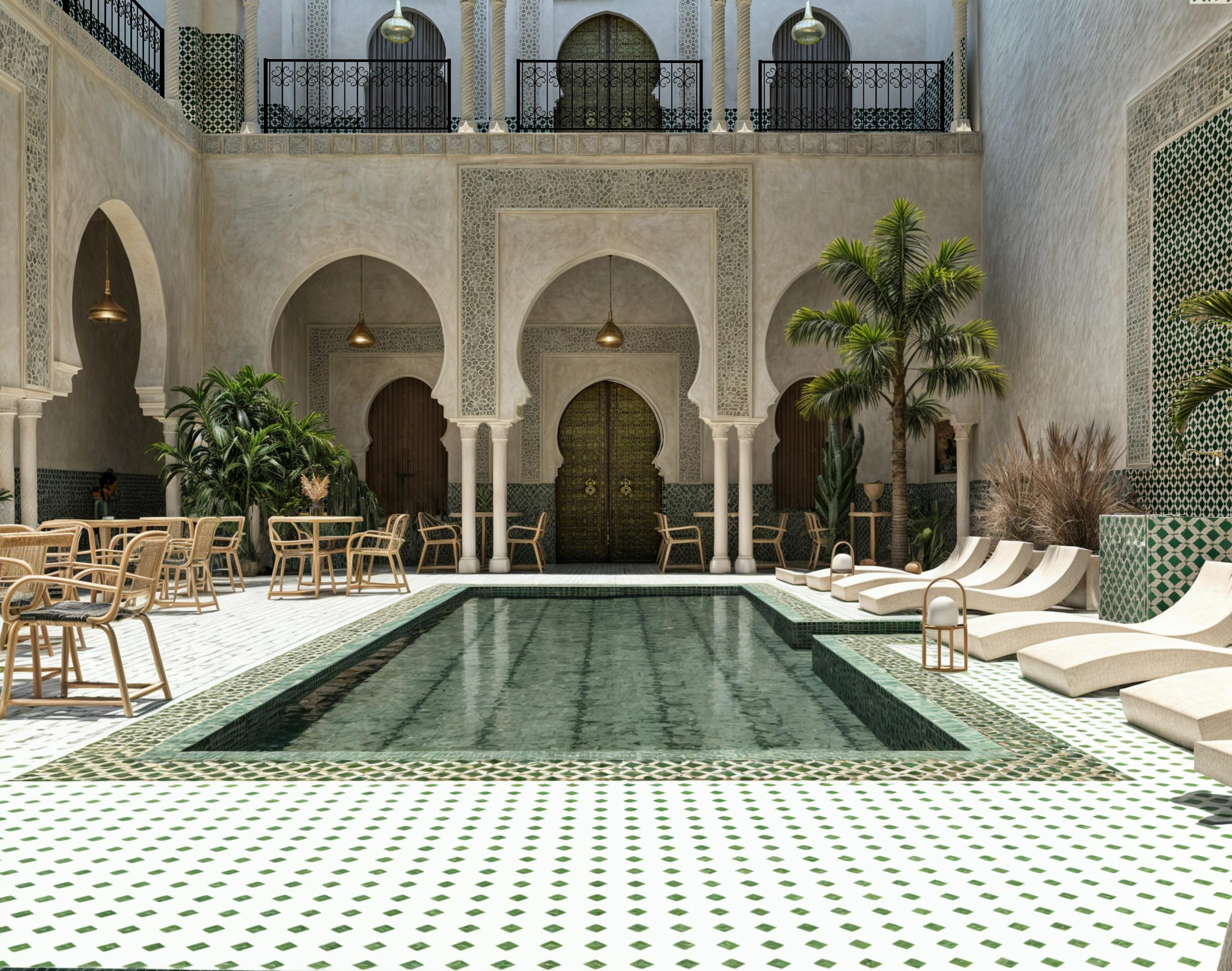
At the center of every riad is its courtyard, often filled with plants, citrus trees, or a small fountain. This space is not only decorative but also functional. It allows natural light to flow into the house, helps regulate temperature during hot days, and creates a tranquil atmosphere where residents can relax. The rooms of the riad are typically arranged around this courtyard on two or more levels, with balconies or walkways overlooking the central space, reinforcing a sense of openness while maintaining privacy.
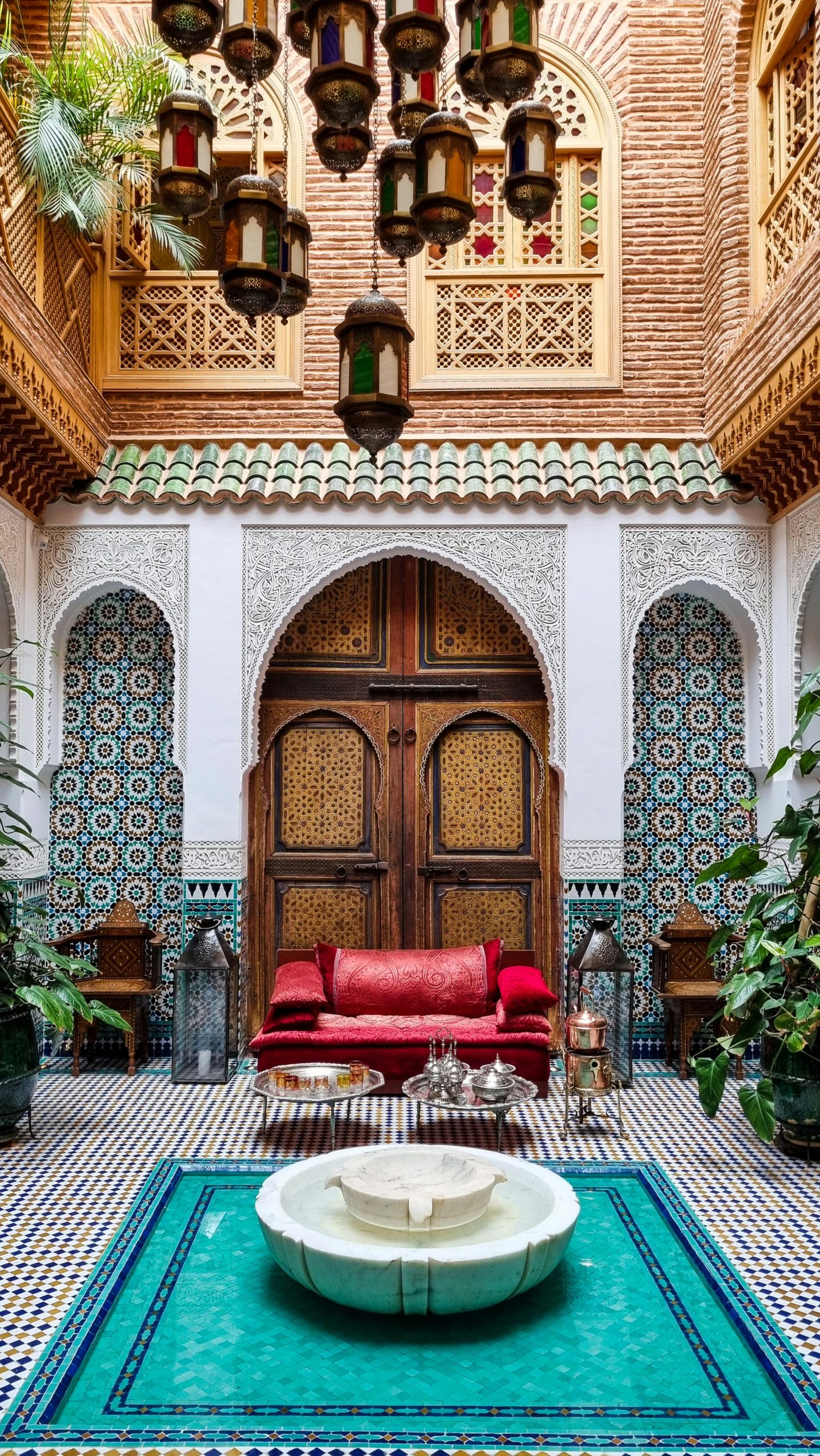
One of the most distinctive features of a riad is its contrast between exterior and interior. From the outside, riads often appear simple, with plain walls and minimal decoration. However, once inside, they reveal intricate craftsmanship and detailed design. Elements such as Zellige tilework, carved plaster, and hand-finished wood reflect Morocco’s rich artistic heritage. Every detail is carefully designed to create an environment that is both aesthetically beautiful and deeply connected to tradition.
Historically, riads were built for wealthy families in cities like Marrakech and Fes, where space within the medina was limited and privacy was highly valued. Their inward-facing design allowed families to live comfortably while remaining protected from external noise and heat. Over time, many of these historic homes have been restored and transformed into boutique accommodations, offering visitors the opportunity to experience this unique architectural style firsthand.
Today, staying in a riad is considered one of the most authentic ways to experience Morocco. It provides not just a place to sleep, but a connection to the country’s culture, design, and way of life. For travelers combining different experiences—whether cultural exploration, relaxation, or even activities like golf—a riad offers a setting that is both intimate and enriching, adding depth to the overall journey.
The Historical Origins of Riads
To fully understand the beauty and purpose of a riad, it is important to look at its historical roots. These traditional homes are not simply architectural choices—they are the result of centuries of cultural influence, environmental adaptation, and social values that shaped the way people lived in Morocco.
The concept of the riad dates back to Islamic and Andalusian architectural traditions, where homes were designed to prioritize privacy, family life, and harmony with nature. This style was introduced to Morocco during periods of cultural exchange, particularly after the fall of Al-Andalus, when skilled artisans and architects brought their knowledge and craftsmanship to cities such as Fes and later Marrakech. Over time, these influences blended with local building techniques to create the distinctive Moroccan riad.
In traditional Moroccan society, the home was considered a private sanctuary. This explains why riads were designed to face inward rather than outward. The central courtyard served as the heart of family life—a place where daily activities took place, children played, and guests were received. The absence of large exterior windows helped maintain discretion, while also protecting residents from heat and noise in densely populated medinas.
Riads were typically owned by affluent families, merchants, or local elites, reflecting both social status and refined taste. The more elaborate the design, the more it demonstrated wealth and cultural appreciation. Skilled artisans would spend months, sometimes years, crafting intricate details such as carved plaster, woodwork, and decorative tile patterns. These elements were not only ornamental but also symbolic of artistic excellence passed down through generations.
As Moroccan cities evolved, many riads fell into disrepair, especially during periods of urban expansion when modern housing became more common. However, in recent decades, there has been a renewed interest in preserving these historic homes. Restoration projects have brought many riads back to life, particularly in cities like Marrakech, where they have been transformed into boutique guesthouses that retain their original charm while offering modern comfort.
Today, riads stand as a living connection between past and present. They reflect a way of life rooted in tradition while continuing to adapt to contemporary needs. For visitors, understanding their history adds a deeper layer to the experience—turning a simple stay into a journey through Morocco’s cultural and architectural heritage.
Ready to experience the charm of a true Moroccan riad?
Step into a world of elegance, privacy, and timeless design in the heart of Marrakech. Tell us about your stay and let us craft the perfect riad experience for you.
The Unique Architecture of Riads
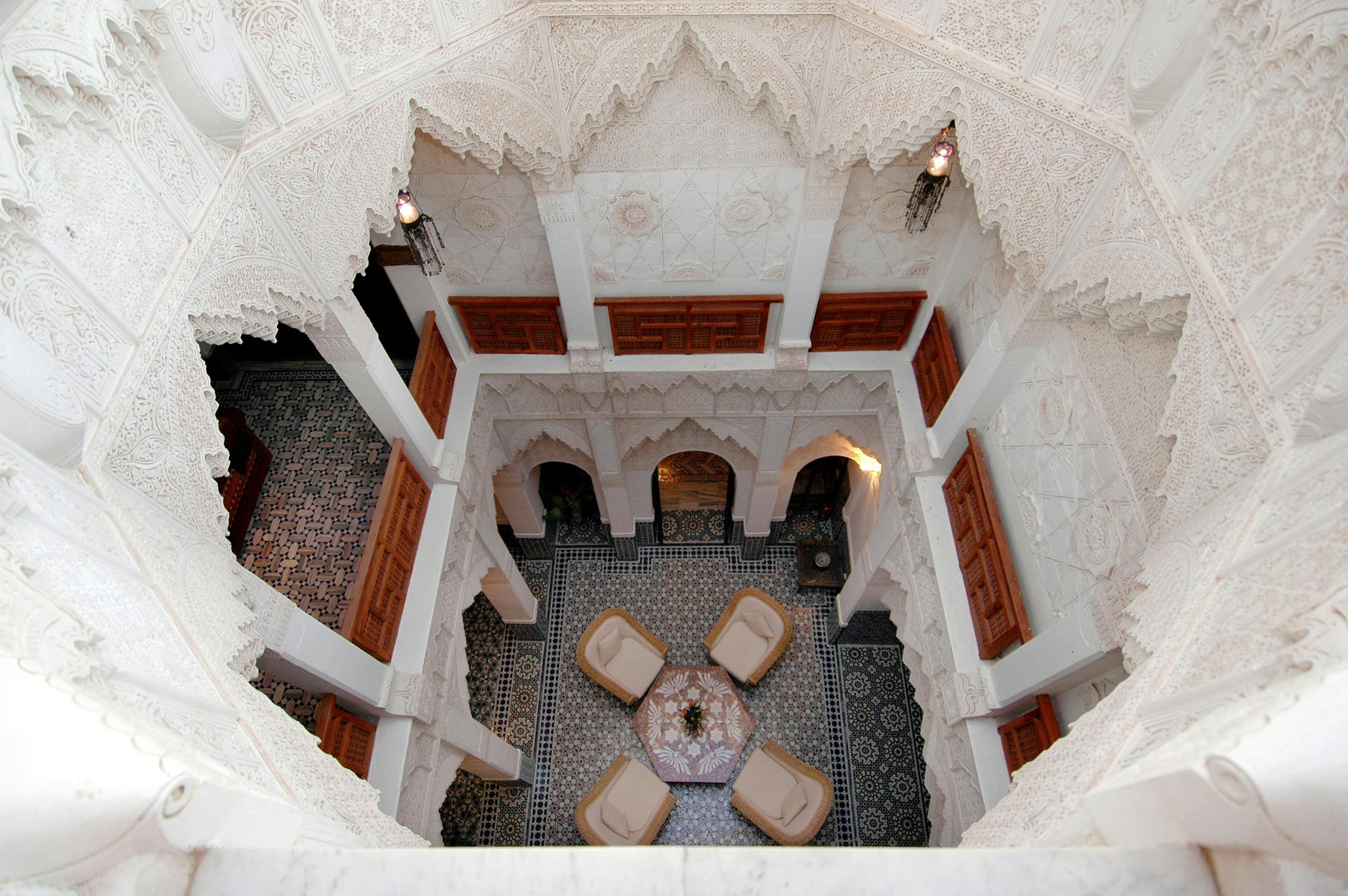
What truly sets a riad apart is its distinctive architectural concept—one that prioritizes interior space, balance, and a deep connection with the environment. Unlike conventional homes that open outward to the street, riads are designed to turn inward, creating a protected and serene living space that feels almost hidden from the outside world.
At the core of this design is the central courtyard, which acts as the heart of the riad. This open-air space allows sunlight to flow naturally into the home while promoting air circulation, an essential feature in Morocco’s warm climate. The courtyard often includes a fountain or small garden—elements that are not only visually calming but also help cool the surrounding air. This intelligent design creates a microclimate inside the riad, making it significantly more comfortable than the bustling streets outside, especially in historic cities like Marrakech.
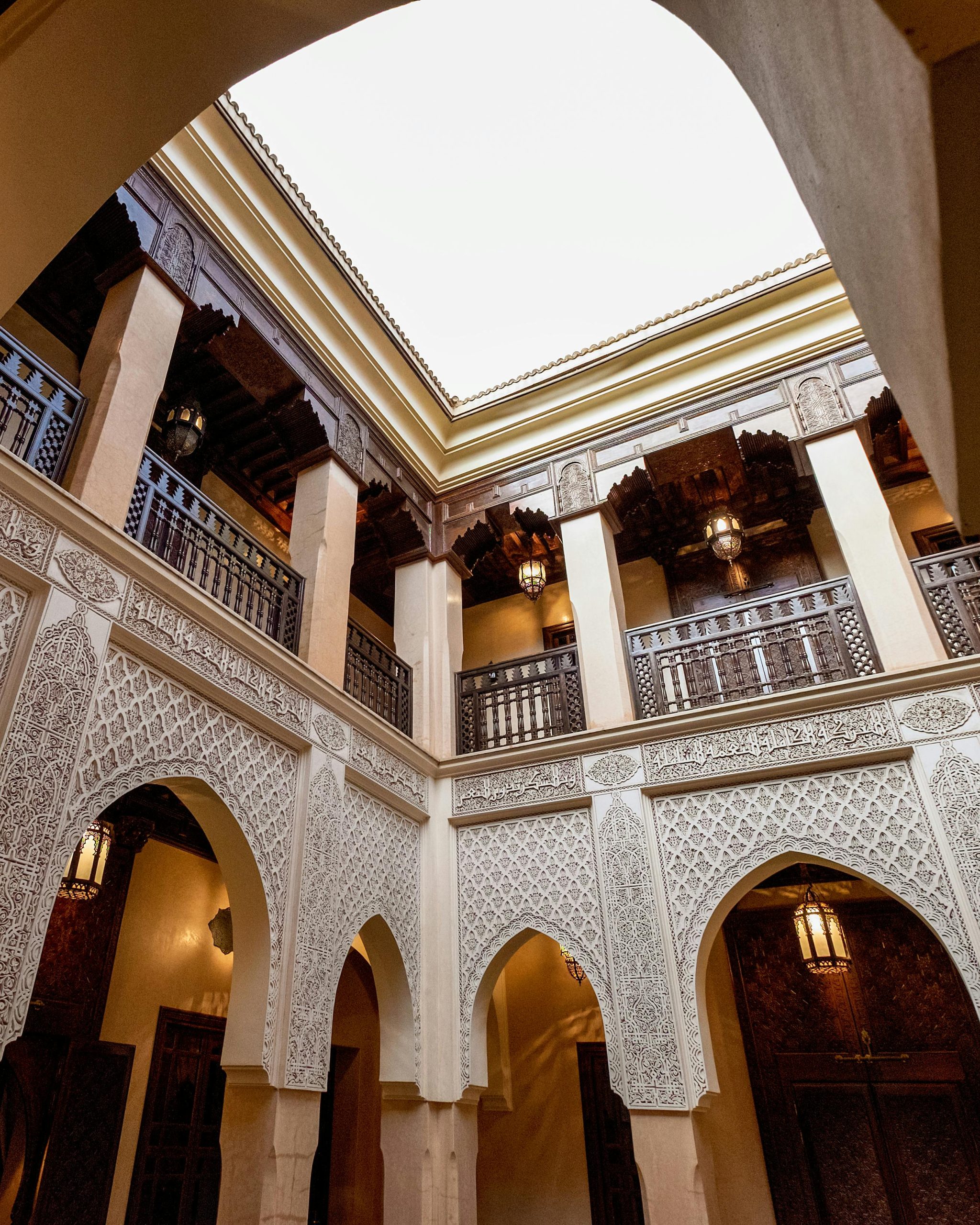
The layout of a riad typically follows a symmetrical structure, with rooms arranged around the courtyard on multiple levels. Galleries or walkways overlook the central space, creating a sense of openness while maintaining privacy. This inward orientation reflects both cultural values and practical needs, offering a quiet retreat away from noise and outside activity.
Another defining feature is the limited presence of exterior windows. While this may seem unusual at first, it serves multiple purposes: enhancing privacy, reducing heat exposure, and reinforcing the idea that the true beauty of the riad lies within. Once inside, the contrast is striking—spaces are filled with light, detail, and craftsmanship that reveal the artistic richness of Moroccan design.
Materials and structure also play an important role. Thick walls help regulate temperature, keeping interiors cool during hot days and warm during cooler nights. High ceilings, often adorned with carved wood or decorative plaster, add to the sense of space and elegance. Every architectural element is carefully considered, combining function with aesthetic harmony.
Today, this timeless design continues to appeal to modern travelers. Whether used as private residences or boutique accommodations, riads offer a unique spatial experience that cannot be found in standard hotels. For those exploring Morocco through different experiences—including cultural discovery and even activities like golf—the architecture of a riad enhances the journey, providing a peaceful and authentic environment that complements every moment of the stay.
Design Elements That Define a Riad
Beyond its architectural layout, what truly brings a riad to life is its rich and intricate design. Every detail inside a riad reflects centuries of craftsmanship, artistic expression, and cultural identity. These elements are not randomly chosen—they are carefully combined to create a harmonious and immersive environment that feels both elegant and authentic.
One of the most recognizable features of a riad is the use of Zellige, a traditional form of handcrafted tilework arranged in complex geometric patterns. These tiles often cover floors, walls, and fountains, adding color, symmetry, and texture to the space. Each piece is individually cut and placed, showcasing the precision and skill of Moroccan artisans.
Another key element is carved plaster, also known as stucco, which is used to decorate walls, arches, and ceilings. These delicate carvings often feature floral motifs, calligraphy-inspired patterns, and repeating geometric designs. They add depth and refinement to the interiors, transforming simple surfaces into works of art.
Woodwork also plays a central role in riad design. Doors, ceilings, and window frames are often made from cedar wood and intricately carved or painted. This craftsmanship not only enhances the visual appeal but also reflects traditional techniques passed down through generations. The warmth of the wood contrasts beautifully with the cool tones of tile and plaster.
Water is another essential feature, usually present in the form of a central fountain. Beyond its aesthetic value, the sound of flowing water creates a calming atmosphere and contributes to the cooling effect of the courtyard. Combined with plants and natural light, it helps create a peaceful and balanced environment.
Textiles and decorative details complete the space. From handwoven rugs to embroidered cushions and lantern-style lighting, every element adds character and comfort. These finishing touches turn a riad into more than just a house—they create a sensory experience that engages sight, sound, and atmosphere.
Together, these design elements define the identity of a riad. They reflect a deep appreciation for beauty, craftsmanship, and balance—values that continue to shape Moroccan interiors today. For visitors, experiencing these details up close offers a deeper understanding of the culture, making a stay in a riad both visually inspiring and culturally enriching.
The Experience of Staying in a Riad
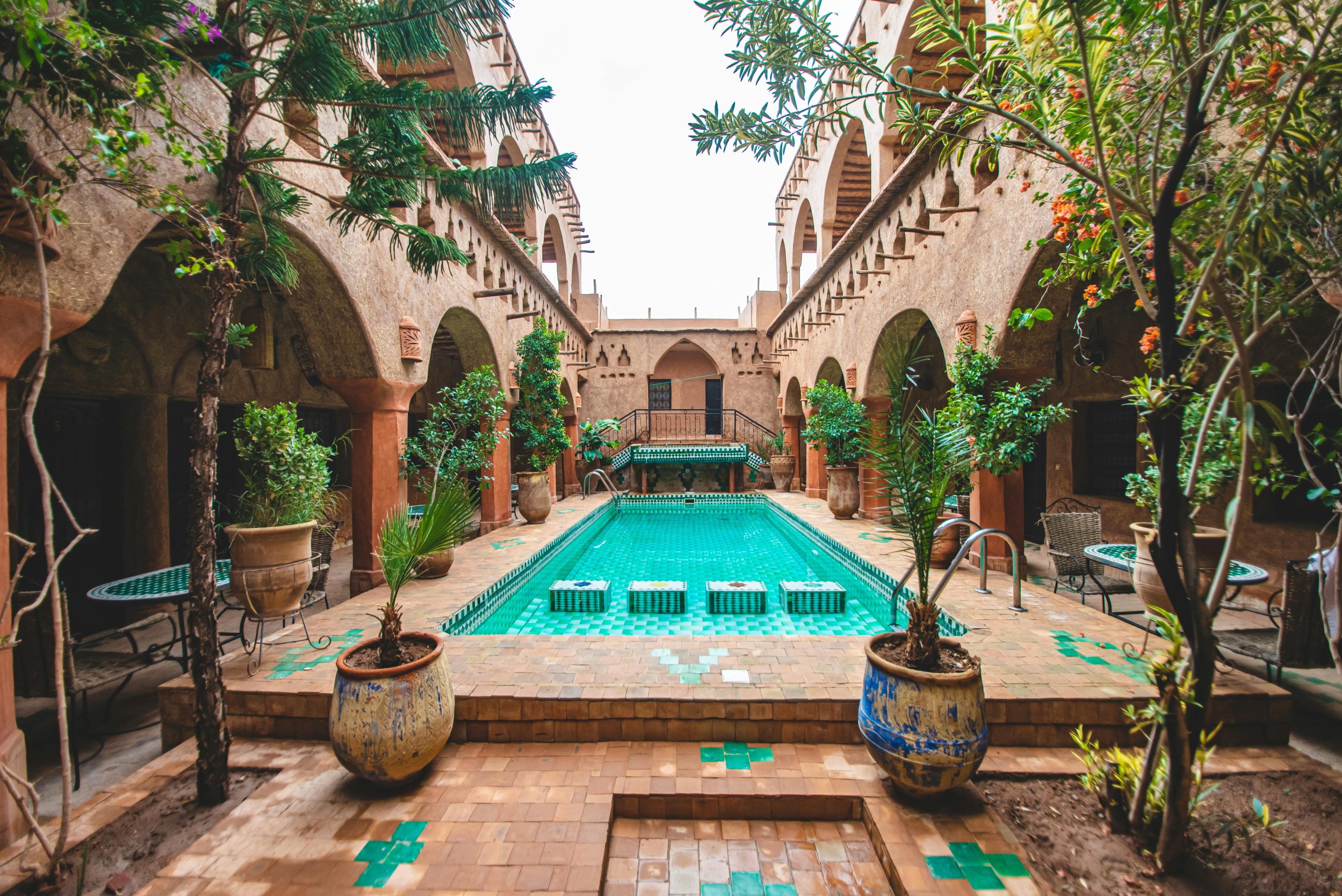
Staying in a riad is more than just accommodation—it is an experience that immerses visitors in the atmosphere, rhythm, and character of Moroccan life. From the moment you step inside, the contrast with the outside world becomes clear. The busy streets, vibrant markets, and constant movement of the medina fade away, replaced by a sense of calm, privacy, and understated luxury.
Unlike large hotels, riads are typically intimate in scale, often featuring a limited number of rooms. This creates a more personal and relaxed environment, where guests can enjoy attentive service and a quieter stay. The layout itself encourages a slower pace—morning light filling the courtyard, the gentle sound of water from the fountain, and evenings spent in peaceful surroundings. It is a setting designed for comfort and reflection.
Another defining aspect of the riad experience is Moroccan hospitality. Guests are often welcomed with traditional touches, creating a warm and authentic atmosphere. Whether it is enjoying breakfast in the courtyard or relaxing on a rooftop terrace overlooking the medina, every moment feels thoughtfully curated and connected to local culture.
In cities like Marrakech, staying in a riad also places visitors right in the heart of historic neighborhoods, allowing them to explore cultural landmarks, souks, and hidden corners with ease. At the same time, the riad remains a private retreat to return to after a day of exploration.
For travelers combining different experiences—such as cultural visits, relaxation, and activities like golf—a riad offers the perfect balance. It provides a peaceful base that complements more active parts of the journey, allowing guests to recharge in a setting that feels both authentic and refined.
Ultimately, what makes staying in a riad so memorable is not just its design, but the feeling it creates. It is an experience shaped by space, detail, and atmosphere—one that stays with visitors long after their journey through Morocco comes to an end.
Riads in Modern Morocco
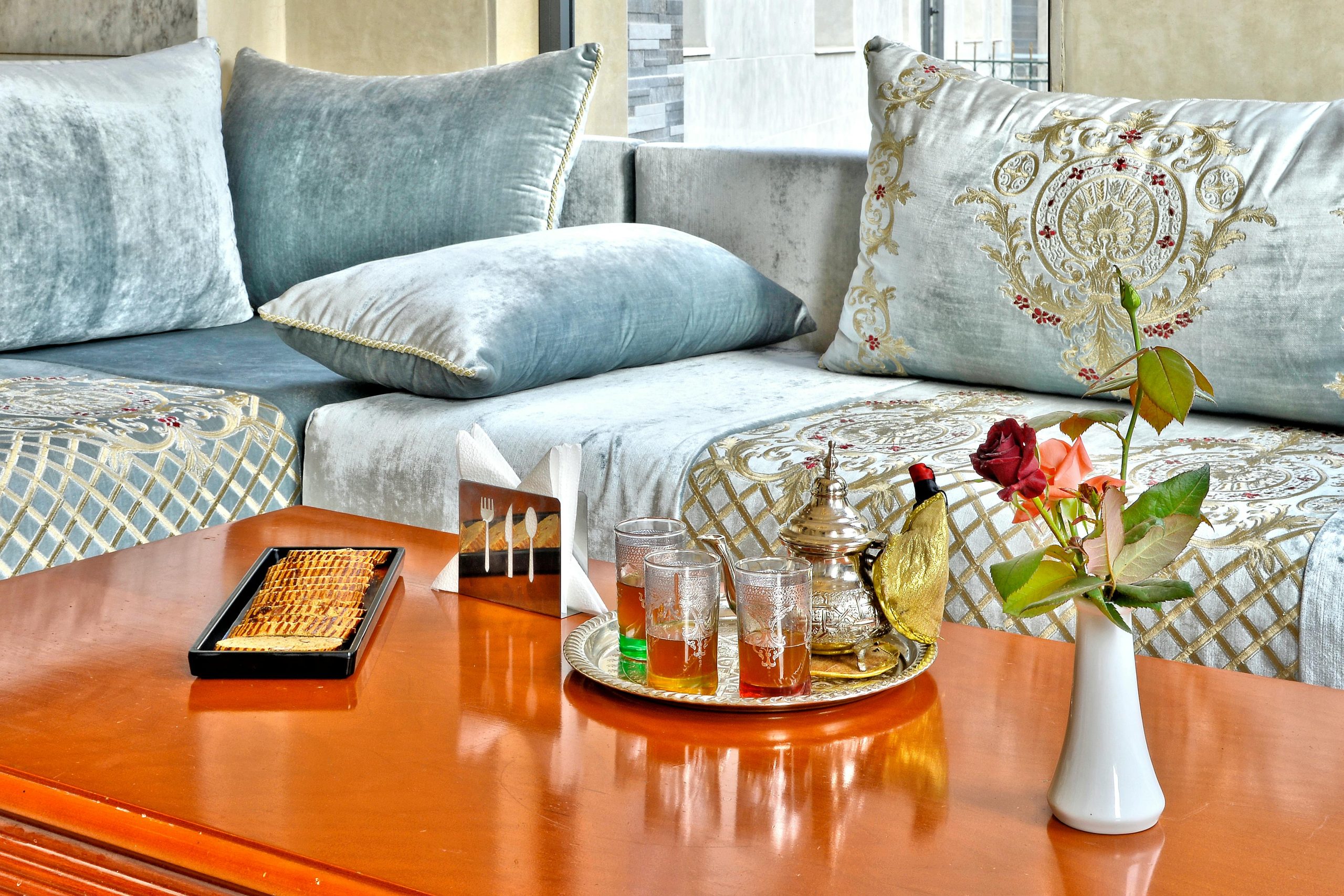
In today’s Morocco, the riad has evolved from a private family residence into one of the most sought-after types of accommodation. While many riads still preserve their original structure and character, they have been carefully restored and adapted to meet modern expectations—creating a unique blend of tradition and contemporary comfort.
Over the past few decades, cities like Marrakech and Fes have seen a growing interest in renovating historic riads. Investors, designers, and local artisans have worked together to bring these spaces back to life, maintaining their architectural authenticity while introducing modern amenities such as private bathrooms, air conditioning, and rooftop terraces. The result is a new generation of boutique riads that offer both cultural charm and high-end comfort.
This transformation has also played an important role in preserving Morocco’s architectural heritage. Instead of being abandoned or replaced by modern buildings, many riads have been restored using traditional materials and techniques. Skilled craftsmen continue to recreate detailed elements like tilework, wood carving, and plaster decoration, ensuring that these historic homes retain their original identity.
Today, riads appeal to a wide range of travelers—from those seeking cultural immersion to those looking for luxury and exclusivity. Many have become boutique hotels known for their personalized service, unique design, and intimate atmosphere. Unlike standardized accommodations, no two riads are exactly alike, making each stay a distinctive experience.
For travelers planning a well-rounded trip, riads also fit perfectly into multi-experience journeys. Whether exploring historic medinas, discovering local culture, or enjoying activities like golf, staying in a riad adds depth and authenticity to the overall experience. It allows visitors to connect with Morocco not just as a destination, but as a living culture expressed through architecture and design.
As Morocco continues to grow as a global destination, riads remain at the heart of its identity—bridging the past and present while offering travelers a truly unique way to experience the country.
Why Riads Are Central to Moroccan Identity
The riad is more than an architectural style—it is a reflection of Morocco’s cultural values, social traditions, and way of life. Every aspect of its design, from the inward-facing layout to the detailed craftsmanship, is rooted in principles that have shaped Moroccan society for centuries. Understanding riads means understanding how space, privacy, and beauty are deeply connected to everyday life in Morocco.
At the heart of this identity is the concept of privacy and family life. Riads were designed to protect and nurture the household, offering a secure and peaceful environment within the dense structure of historic cities. The inward orientation allows daily life to unfold away from outside view, creating a space where family and close guests can gather freely. This reflects a broader cultural emphasis on the home as a place of comfort, respect, and connection.
Riads also represent Morocco’s rich artistic heritage. The intricate details found in their interiors—tilework, carved plaster, and wood—are not only decorative but symbolic of a long tradition of craftsmanship. These elements highlight the importance of artistry in Moroccan culture, where beauty is integrated into everyday surroundings rather than reserved for special occasions.
In cities like Fes, one of the oldest and most historically significant urban centers in the country, riads are a key part of the medina’s identity. They contribute to the unique character of these cities, preserving architectural continuity and offering insight into how people lived in the past.
Today, even as Morocco continues to modernize, riads remain a powerful symbol of cultural continuity. Their preservation and adaptation into guesthouses and boutique stays ensure that this heritage is not only protected but also shared with visitors from around the world. For travelers, staying in a riad is not just about comfort—it is about experiencing a living tradition that continues to define Moroccan identity.
Ultimately, riads embody a balance between simplicity and sophistication, privacy and openness, tradition and evolution. They are not just places to stay—they are spaces that tell the story of Morocco itself.
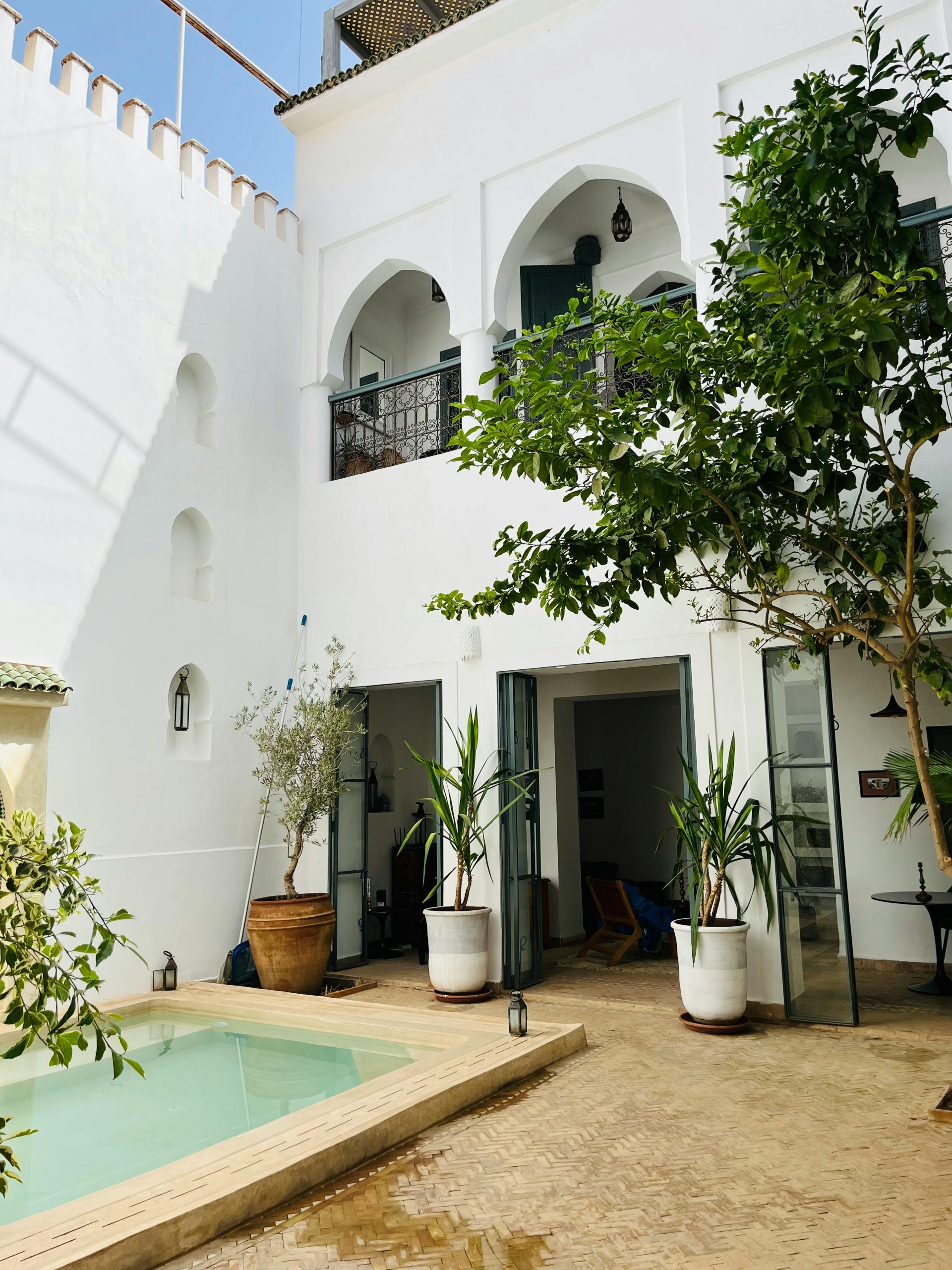
Riad stands as one of the most distinctive expressions of Moroccan architecture, blending history, design, and cultural values into a unique living space that goes far beyond simple accommodation. From its inward-facing layout and peaceful courtyard to its intricate craftsmanship and artistic details, every element reflects a way of life centered on privacy, beauty, and balance. Today, riads continue to connect the past with the present, offering travelers an authentic and immersive experience—whether exploring cities like Marrakech and Fes or combining cultural discovery with activities such as golf. More than just a place to stay, a riad invites you to experience Morocco from within—so would you choose an ordinary stay, or step inside a riad and discover something truly unforgettable?